About the Assembly

Nkwanta South Municipal Assembly

The Assembly is the highest administrative and political authority of the municipality, coordinating development planning, local governance, public services, and community participation across Nkwanta South.

1989 Established as Nkwanta District Assembly
2017 Inaugurated as a Municipal Assembly
2,733 Square kilometres of land area
135,936 Population from the 2021 census
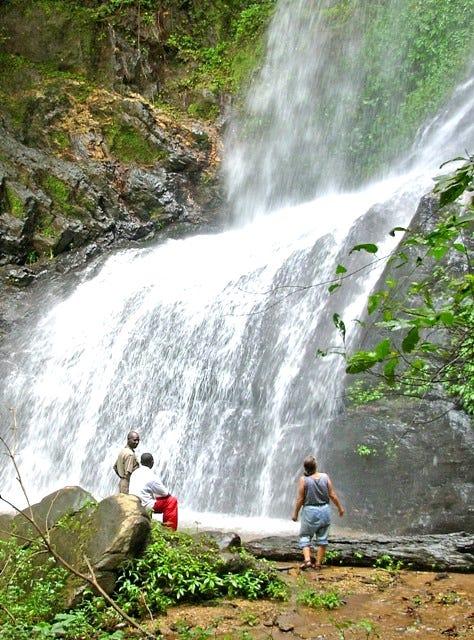
Nkwanta South municipal landscape
Oti Region Largest municipality in the region by land area.
Our story

A municipality shaped by service, growth, and local participation.

The Nkwanta South Municipal Assembly is one of the nine districts in the Oti Region of Ghana. The district was originally carved out of the former Kete-Krachi District in 1989 and operated under the name Nkwanta District Assembly.

Following the creation of the Nkwanta North District in 2008, the Assembly was reconstituted under Legislative Instrument (L.I.) 1892 of 2008 and renamed Nkwanta South District Assembly. With the creation of the Oti Region, the Assembly was elevated to Municipal status and officially inaugurated on 15th May 2017 under Legislative Instrument (L.I.) 2283.

The administrative capital is Nkwanta, serving as the coordination point for municipal administration, development planning, public service delivery, and stakeholder engagement.

  • 1989

    District Assembly created

    Nkwanta District Assembly was carved out of the former Kete-Krachi District.

  • 2008

    Reconstituted under L.I. 1892

    Following the creation of Nkwanta North District, the Assembly was renamed Nkwanta South District Assembly.

  • 2017

    Municipal status

    The Assembly was elevated to Municipal status and officially inaugurated on 15th May 2017 under L.I. 2283.

Local governance

A representative Assembly with grassroots structures.

The General Assembly is the highest decision-making body of the municipality, supported by Zonal Councils and Unit Committees that bring local participation closer to communities.

General Assembly membership

The General Assembly has forty-five members, combining elected representation, appointed leadership, executive coordination, and parliamentary representation.

30 Elected members
13 Government appointees
1 Municipal Chief Executive
1 Member of Parliament

Mandate

The purpose behind the Assembly's work.

The Assembly works with stakeholders to improve quality of life, mobilise resources, and create conditions for sustained poverty reduction and inclusive development.

Vision

To become a highly efficient socio-economic service provider that creates an enabling environment for resource mobilization in partnership with stakeholders for sustained poverty reduction.

Mission

The Nkwanta South Municipal Assembly exists to facilitate improvement in the general quality of life of the people in the municipality through effective sensitization, mobilization of resources, and the promotion of socio-economic development.

Municipal profile

A large, youthful, and diverse municipality.

Nkwanta South combines a strategic border location, rural settlements, traditional leadership, youthful demographics, and a broad cultural profile.

Community scene in Nkwanta South
316 settlements About 75 percent of the population lives in rural areas.

Location and Size

Nkwanta South Municipality is located in the Oti Region and covers approximately 2,733 square kilometres, representing 14.7 percent of the total land area of the region.

  • Largest municipality in the Oti Region by land area.
  • Administrative capital is Nkwanta.
  • Shares boundaries with Nkwanta North District, Kadjebi District, the Republic of Togo, and Krachi East District.

Population

According to the 2021 Population and Housing Census, the municipality has a total population of 135,936 people, comprising 68,143 males and 67,793 females.

  • Annual population growth rate is approximately 1.3 percent.
  • Population density is about 55.61 persons per square kilometre.
  • Children constitute about 41.6 percent of the total population.

Ethnic Profile

The municipality is ethnically diverse, with several ethnic groups coexisting peacefully and contributing to local governance and development.

  • Major groups include Ntrubo, Adele, Atwode, and Konkomba.
  • Other groups include Ewe, Akan, Kotokoli, and Basare.
  • Traditional authorities support community mobilisation, peace, order, and local development initiatives.

Major towns

The municipality has approximately 316 settlements, with key towns serving as centres for administration, trade, services, and community life.

  • Nkwanta
  • Brewaniase
  • Bonakye
  • Keri
  • Kecheibi
  • Shiare
  • Kabiti
  • Kue
  • Pusupu
  • Ashiabre

Explore how the Assembly serves Nkwanta South.

Learn about the departments, people, documents, and services that support municipal development and public accountability.